Ethics of being a breeder / Animal Husbandry
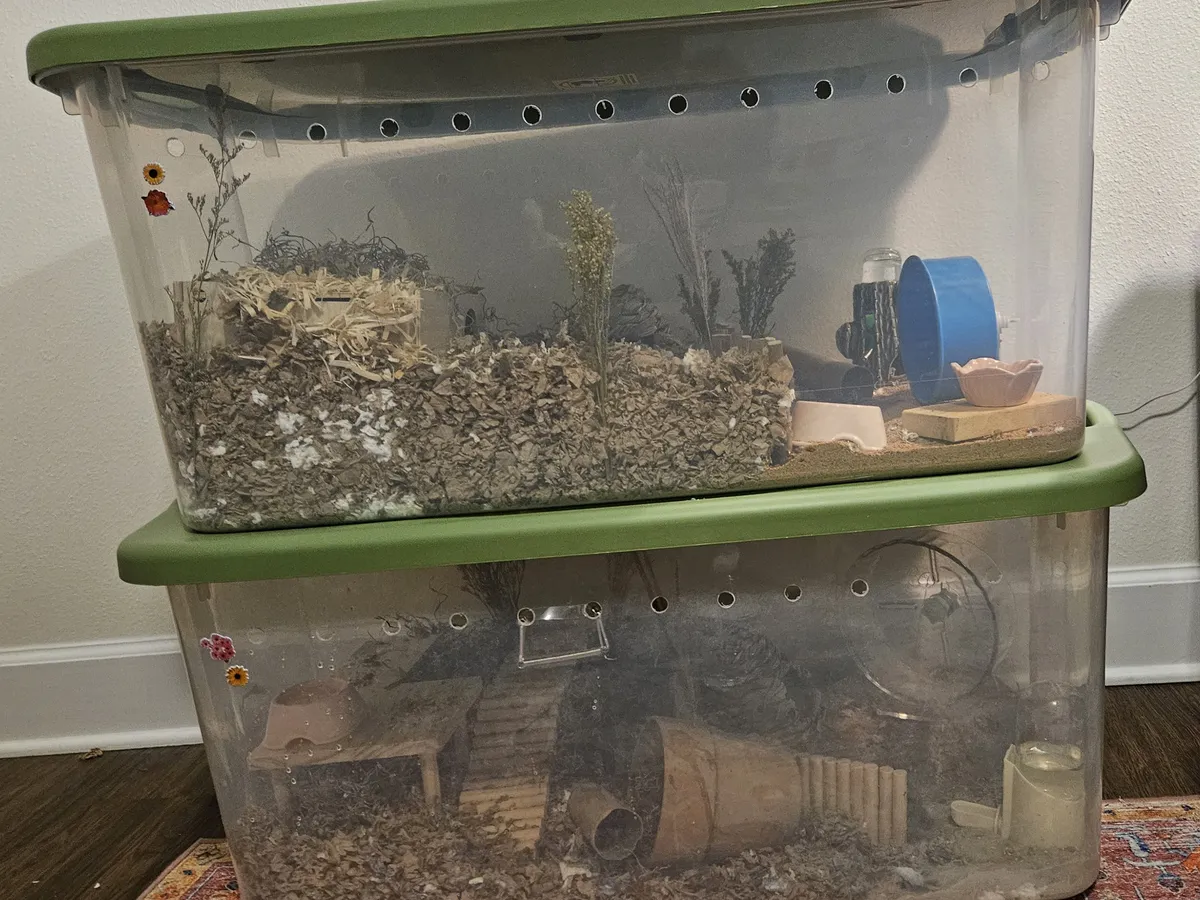
When people talk about animal care, especially small mammals, the conversation can become extreme very fast. One side can make it sound like keeping or breeding animals is automatically wrong. The other side can act like animals only need food, water, and a cage. I do not think either extreme is useful, and I do not think either one represents true husbandry.
Real husbandry sits somewhere in the middle.
Animals deserve proper care. They deserve clean housing, safe food, enrichment, protection from stress, and a life that allows them to behave like the species they are. But that does not mean every setup has to look identical, cost the same amount, or follow one exact online standard. Good care is not about copying the most popular enclosure on social media. It is about understanding the animal, understanding its natural behavior, and creating a setup that meets its needs in a realistic and responsible way.
Small mammals are often underestimated because they are small. People look at a hamster, mouse, rat, gerbil, guinea pig, or rabbit and assume that because the animal is little, its needs must also be little. That is not true. Small animals still have instincts, stress responses, social needs or solitary needs, and behaviors that matter. Some need deep bedding. Some need climbing space. Some need companionship. Some need room to run. Some need careful handling because they are fragile, fast, and easily overwhelmed.
Roborovski hamsters are a perfect example.
Robos are tiny, fast, active desert hamsters. They are not always the cuddly hamster people imagine when they think of a pet. A Robo may never sit calmly in someone’s hand like a Syrian hamster might. Some can become tame, curious, and comfortable with people, especially through patient handling and careful breeding, but they are still Roborovskis. They are naturally quick, alert, and busy. Ethical care means respecting that instead of trying to turn them into a different animal.
That is where husbandry becomes important.
A Roborovski needs room to run, safe bedding, a proper wheel, a sand bath, hides, food, water, and enrichment. But there is more than one way to provide those things. One person may use a glass tank. Another may use a bin cage. Someone else may build a wooden enclosure. The most important question is not whether the cage looks expensive or trendy. The question is whether the animal is safe, secure, clean, enriched, and able to use natural behaviors.
This is where people sometimes lose the point.
Care should not become a competition. A simple bin cage can be excellent if it is large enough, well ventilated, secure, and thoughtfully arranged. An expensive enclosure can still be poor care if it is too shallow, too empty, poorly ventilated, or designed more for photos than for the animal. Ethics is not about aesthetic perfection. It is about responsibility.
Breeding raises that responsibility even higher.
Ethical breeding is not just putting two animals together because babies are cute or because a color is desirable. Breeding should have a purpose behind it. That purpose should include health, temperament, structure, genetic awareness, proper maternal condition, and a plan for the offspring. With small mammals, it is very easy for people to treat breeding casually because the animals reproduce quickly. But fast reproduction does not make breeding simple. It actually makes responsibility even more important.
A responsible breeder should be asking real questions.
Are these animals healthy enough to breed?
Are they mature enough, but not too old?
Is the female in good condition?
Do I understand the species well enough?
Do I have space for the babies if they do not leave right away?
Am I selecting for health and temperament, not only color?
Do I have a plan if the litter is larger than expected?
Am I willing to stop using a line if problems keep showing up?
These questions matter.
With Roborovskis, this is especially important because they are often misunderstood. People see their size and assume they are easy beginner pets. But Robos can be skittish, extremely fast, and difficult to handle. Some lines may be calmer than others, and a breeder working toward better temperament over generations is doing meaningful work. But that work also requires honesty. Not every Robo will become cuddly. Not every baby will have the same personality. The goal should be healthier, more confident, more stable animals, not false promises.
Good breeding also means knowing when not to breed.
An animal should not be bred just because it exists. If an animal is sick, weak, extremely fearful, unusually aggressive in a way that seems inherited, too young, too old, or not recovering well from a previous litter, then breeding should be reconsidered. If a pairing produces repeated problems, those results should not be ignored. One unfortunate outcome does not always mean an entire line is bad, but patterns matter. A breeder who pays attention to patterns is a breeder who is taking responsibility.
No breeder is perfect. Animals are living creatures, and even under good care, things can still go wrong. A baby may be born weak. A mother may fail to care for a litter. A temperament may not develop the way you hoped. Ethical breeding is not proven by never having a problem. It is proven by how you respond when a problem appears.
Do you keep records?
Do you learn from the outcome?
Do you change the pairing?
Do you remove an animal from your breeding plans if needed?
Do you tell the truth to future owners?
That is what separates thoughtful breeding from careless breeding.
The same applies to everyday care. Husbandry should be based on the needs of the species, but it should also leave room for practical variation. Not every keeper has the same space, budget, climate, materials, or goals. One person may use aspen bedding. Another may use paper bedding. Another may use a mix of paper, aspen, hay, coco fiber, sand, and safe natural textures. As long as the materials are safe and the animal’s needs are being met, there can be more than one correct approach.
Enrichment is also flexible.
Enrichment does not have to mean buying every toy at the pet store. It can be scatter feeding, sprays, tunnels, cork bark, cardboard, chew materials, deep bedding, sand areas, herbs, hides, climbing branches for appropriate species, or simple changes in layout. The point of enrichment is to give the animal something to do and a way to express natural behavior.
For hamsters, enrichment may mean burrowing, foraging, chewing, running, digging, and exploring.
For rats, it may mean climbing, problem solving, nesting, social interaction, and handling.
For guinea pigs, it may mean hay, tunnels, hides, floor time, and companionship.
For mice, it may mean nesting, climbing, chewing, digging, and exploring.
Different animals need different forms of care. That is why husbandry cannot be based only on trends. It has to be based on the species.
At the same time, flexibility does not mean anything goes.
There are basics that should not be ignored. Animals need clean water, safe food, proper temperatures, safe bedding, enough space, good ventilation, protection from injury, and a low-stress environment. A hamster should not live in a tiny novelty cage just because it is convenient. A rabbit should not spend its entire life in a small hutch without enough movement. A rat should not be kept alone if it needs same-species companionship. A Roborovski should not be treated like a toy for children to chase around with their hands.
There is a difference between flexible husbandry and poor care.
That difference matters.
The best mindset is to keep improving without turning animal care into shame, performance, or internet status. People need education. They need examples. They need honest conversations. Screaming at people usually does not help animals. But excusing poor care because animals survived worse in the past does not help either.
Yes, small mammals have been kept in smaller cages before.
Yes, breeding was done differently in the past.
Yes, some older methods worked in certain situations.
But we also know more now. We can improve without becoming extreme. We can keep the practical side of animal husbandry while still admitting that animals deserve more than the bare minimum.
Being responsible for animals does not mean being perfect. It means being willing to learn. It means noticing when something is not working. It means changing a setup when the animal seems stressed. It means not breeding just because you can. It means choosing health over color when necessary. It means understanding that babies grow up and need real homes. It means respecting the animal as an animal, not as a product, decoration, or trend.
Ethical care for small mammals should be realistic, species-based, and thoughtful. It should not be so extreme that normal people feel like they can never do enough, and it should not be so careless that the animal is only surviving instead of living. There is a middle ground, and that middle ground is where real husbandry belongs.
Animals need enrichment. They need basic care. They need safety. They need clean homes. They need people who are paying attention.
How you provide that may not be set in stone.
But the responsibility is.