A BRIEF EXPLANATION ON HAMSTER BREEDING
Read time: 6 minutes
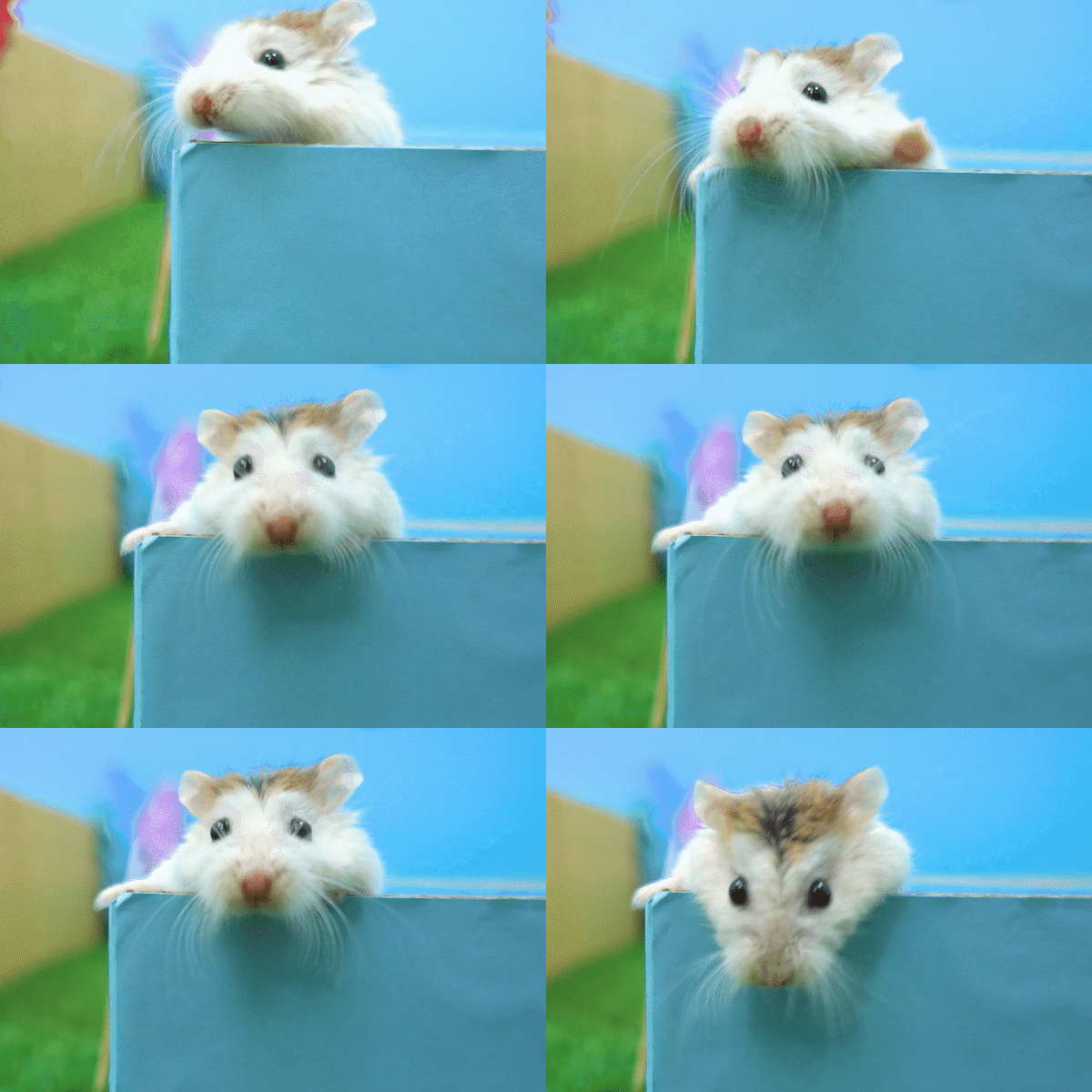
The introduction to Roborovski hamsters in the pet trade and effectively to people's homes to be cherished and loved took place in the 1970's.
They are the most recent hamsters to be considered pets; and they are usually considered semi-domesticated rather than fully domesticated. Unlike the larger variety of hamsters, the Syrian hamsters (or often called teddy bear hamsters by the pet trade) Roborovski hamsters are small, skittish and quick footed rodents that are adapted to the Gobi dessert and the preceding area. These hamsters are crepuscular, not nocturnal, meaning that they tend to be active in the evening hours of the day, though short periods of waking do occur throughout the day and night, usually to eat and then go to sleep again.
My intended goal with hamsters was what any person who appreciates small furry pets strives for; a pet that you can handle and not risk dropping due to their skittishness. I was disappointed to see that Roborovski was seen as a "see-only" pet.
I am personally determined to change that title for the species, though I am happy to mention that I am not the only one with that specific goal in mind. Plenty of breeders across the USA are striving to breed "tame" Roborovski pets.
Though breeding tame Roborovski is the desired goal, it is noted that the general personality of the Roborovksi will most likely not change. What I mean by that is that the general activity level, the general reactions and the quick movement and energy level will not change, only tameness and the allowance of hand holding will. So far, progress in my main line is evident.
When I first started hand taming Roborovski hamsters, I could tell immediately when one pup was going to be good for the next generation breeding program.
When those first few pups started licking my fingers, or climbing on my hand willingly, it felt like a good sign and I am happy to say that it was.
So far, one of the pied female pups who I have named Marseille is my best choice for the next generation, she is bold like her father, and not shy at all. When I pick her up, she stays patiently in my hand and begins to groom herself, indicating that she is quite relaxed in my presence.
She nibbles my hand, yes, but she does not fear me which is a great sign for a small creature such as a hamster. Especially a Roborovski, who are again, known for their skittishness and their tendencies to abruptly flee.
The reason it is so difficult to breed a relatively "tame" Roborovski hamster, is first because there is no selective pressure in America to produce tame ones, the only incentive by rodent mills is to produce hamsters to sell, there is no incentive on health. quality, and or temperament and it is apparent when you look to the hamsters sold in pet stores.
What do you do with your non-eligble untame hamsters?
If they are not adopted out to loving families, I keep them as pets! I don't stress about adopting them out.
What to look for when selecting tame hamsters
When breeding, you want to choose your best stock, not the okay ones. You want the next generation to be considerably better and the pedigree needs to be well drawn out and understood.
There are a couple of things that I could have done better when choosing my lines and what to start with. Things such as seeking out other breeders and getting hamsters of better quality from them.
That does not change the end goal however of getting better hamsters, it just lengthens the process of getting a tame, healthy animal out of the stock that you own.
I used to own mice, and the similarities in both fancy mice and Roborovski are quite interesting, the only thing that I will note is that mice are much less erratic in nature, at least, the tame ones are compared to Roborovski hamsters. Mice are not as skittish because they have been bred for hundreds of years. Roborovskis are relatively new in the pet trade.
Roborovski, however, are known to be active irregardless of their temperament. They do not stop moving, they need to move, they get dopamine from the constant movement and running. A necessary trait if you live in the dessert and have to travel miles to get food, I suppose.